Choosing a name for a new startup often feels like a creative milestone.
In reality, it's one of the first places founders run into unexpected friction.
A name that sounds great can quickly fall apart once you check domain availability, trademark registrations, or social media usernames. These issues rarely surface immediately, but when they do, changing a name becomes expensive, disruptive, and sometimes legally risky.
This article breaks down the most common naming pitfalls and explains how founders can sanity-check a name early, before investing time, branding, or money.
The Three Things Every Startup Name Must Survive
Most naming problems fall into three categories. Ignoring any one of them can lead to trouble later.
1. Domain Availability
The obvious first step is checking whether the domain is available. Unfortunately, this is rarely as simple as finding the exact .com.
Founders often end up with:
- awkward hyphenated domains
- uncommon extensions that users forget
- names that are technically available but already associated with unrelated businesses
A domain doesn't need to be perfect on day one, but it should not actively confuse users or dilute your brand from the start.
2. Trademark Conflicts
This is where many early projects run into serious problems.
A name might be unused as a domain but already registered as a trademark, sometimes in multiple countries, sometimes across industries that overlap more than expected.
Trademark conflicts don't always result in immediate legal action. More often, they surface later:
- when raising funding
- when expanding to new markets
- when launching marketing campaigns
- or when another company notices you growing
At that point, renaming is far more costly than choosing carefully upfront.
3. Social Media Handles
Even if domains and trademarks check out, social media usernames can quietly undermine a brand.
Missing or inconsistent handles can:
- fragment your brand presence
- confuse users searching for you
- make impersonation easier
While not legally critical on day one, social handles are part of brand consistency and trust.
Why Naming Mistakes Are Expensive
Founders often underestimate how painful renaming can be.
A late-stage name change may involve:
- redesigning branding and assets
- changing domains and email addresses
- losing SEO momentum
- re-educating users
- dealing with legal correspondence
Most of these costs can be avoided with basic checks early in the process.
How to Sanity-Check a Name Early
You don't need a full legal audit to make better naming decisions early.
At minimum, founders should:
- check domain availability across common extensions
- look for obvious trademark registrations in major jurisdictions
- verify whether key social handles are available
This process isn't about eliminating all risk, it's about avoiding the most obvious and costly mistakes.
A Lightweight Way to Do Early Checks
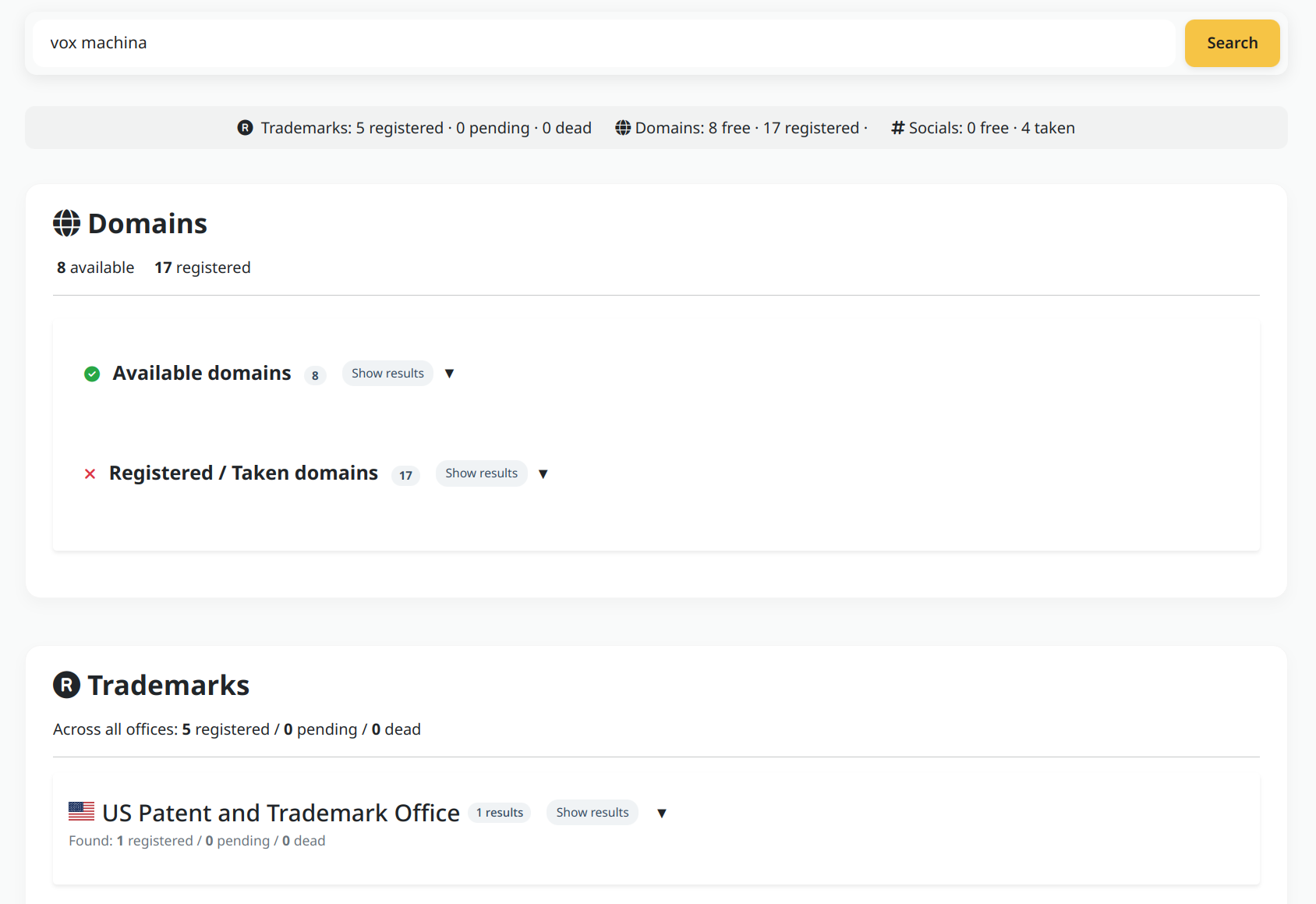
For founders at the naming stage, we built Brandinium as a lightweight way to sanity-check domains, trademarks, and social handles in one place before committing to a name.
It's designed for early exploration, long before monitoring and enforcement become necessary.
When Ongoing Monitoring Matters
Once a project launches and gains traction, brand risks change.
At that stage, continuous monitoring for:
- trademark abuse
- domain impersonation
- copycat websites
- brand misuse
becomes far more important. That's where full brand protection platforms come into play.
Final Thoughts
Choosing a startup name is more than a creative exercise. It's an early risk decision.
A small amount of diligence upfront can prevent months of cleanup later. Tools and processes should match your stage, start simple, stay informed, and scale protection as your brand grows.
