Domain Matching & Evidence
Detect direct matches, lookalikes and keyword variations
BrandCat detects domains that match or imitate your brand across thousands of domain extensions, from direct registrations and simple typos to word blends, keyword twists and other lookalike variations.
For example, if your brand is Instagram, BrandCat can alert you about domains like TheInstagram.com, InstagramBots.com, GetInstagramLikes.com, Instagram.xyz and similar variations.
It can also detect alphabet-mixing tricks, known as homoglyphs, such as Aррlе.com (written with Cyrillic lookalike letters) compared with Apple.com (written in the Latin alphabet). In that example, the two domains look very similar to a human reader, but they are technically different.
Read more about it here: Homoglyph Attacks: How Fake Domains Fool Your Eyes
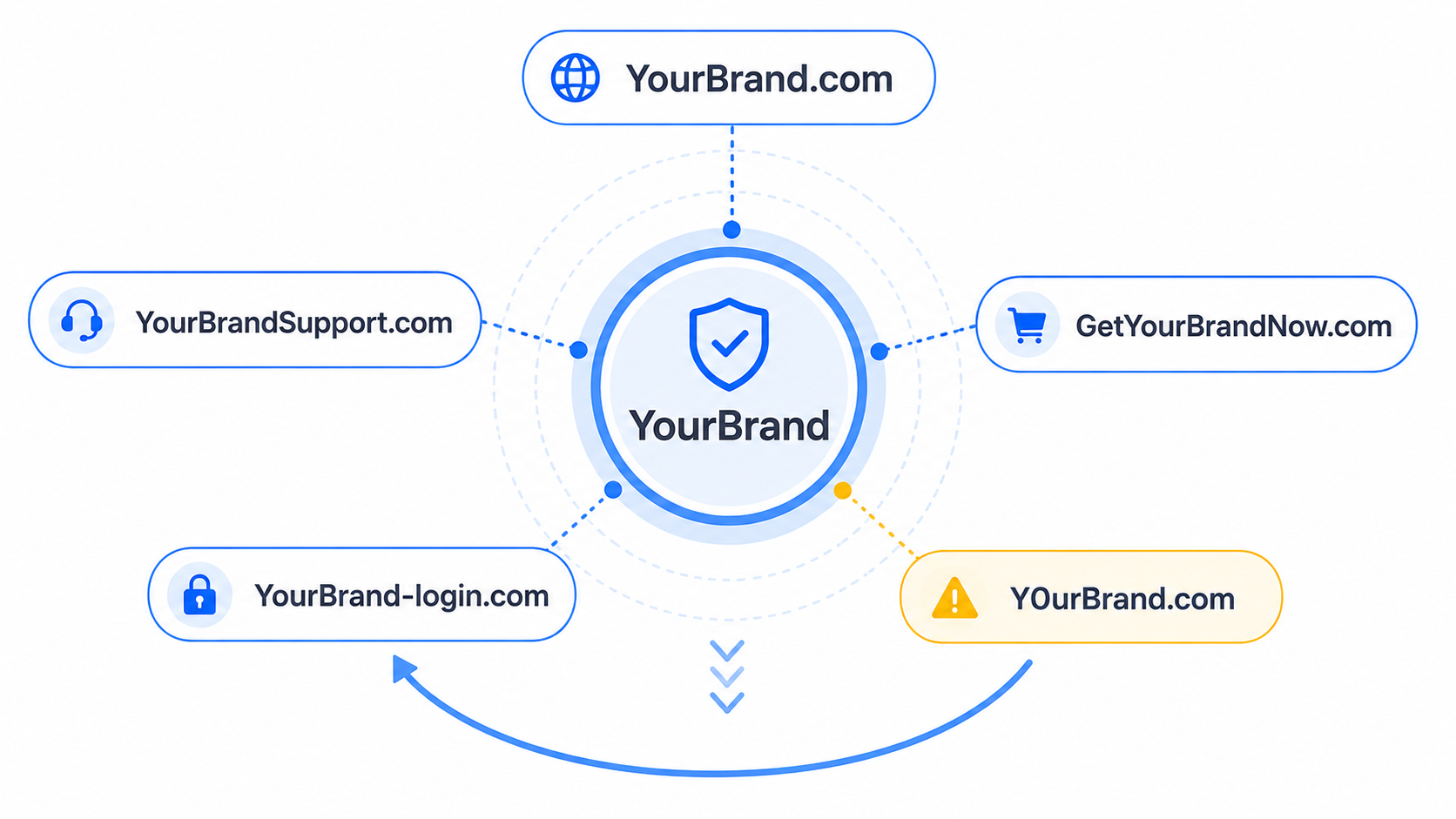
First, BrandCat Finds the Domain Matches
BrandCat does not just list matching domains. It turns each result into a reviewable evidence record, with screenshots, redirects, WHOIS / RDAP, registrar contacts, hosting data, resolved IP, country, ASN, nameservers and domain status.
The results list gives you a quick triage view, while the domain details page lets you inspect one matched domain more deeply without jumping between WHOIS tools, screenshot tools, redirect checkers and hosting lookups.
This helps you separate active websites, parked domains, redirects, newly registered domains, already reviewed results, and groups of domains connected through similar infrastructure.
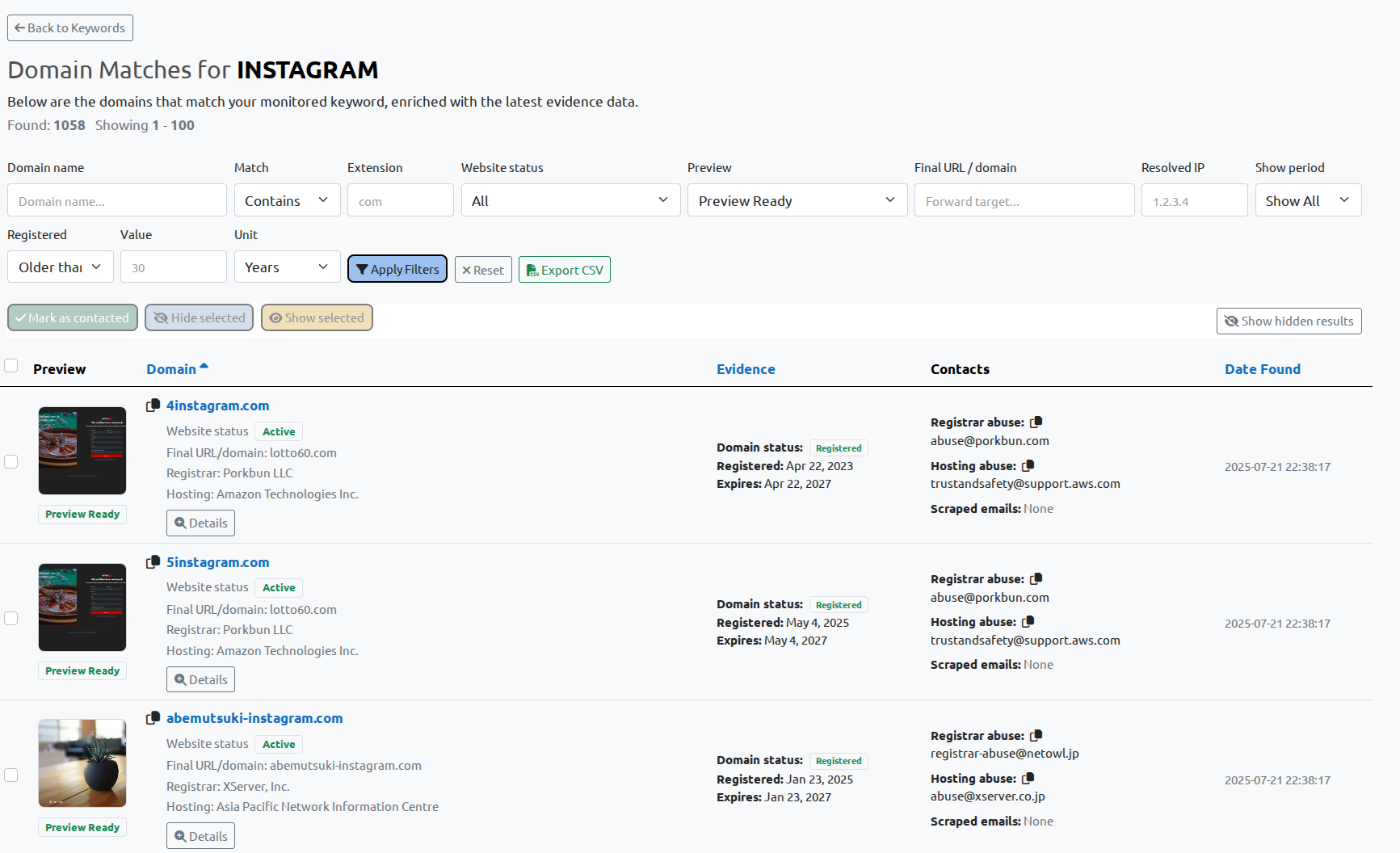
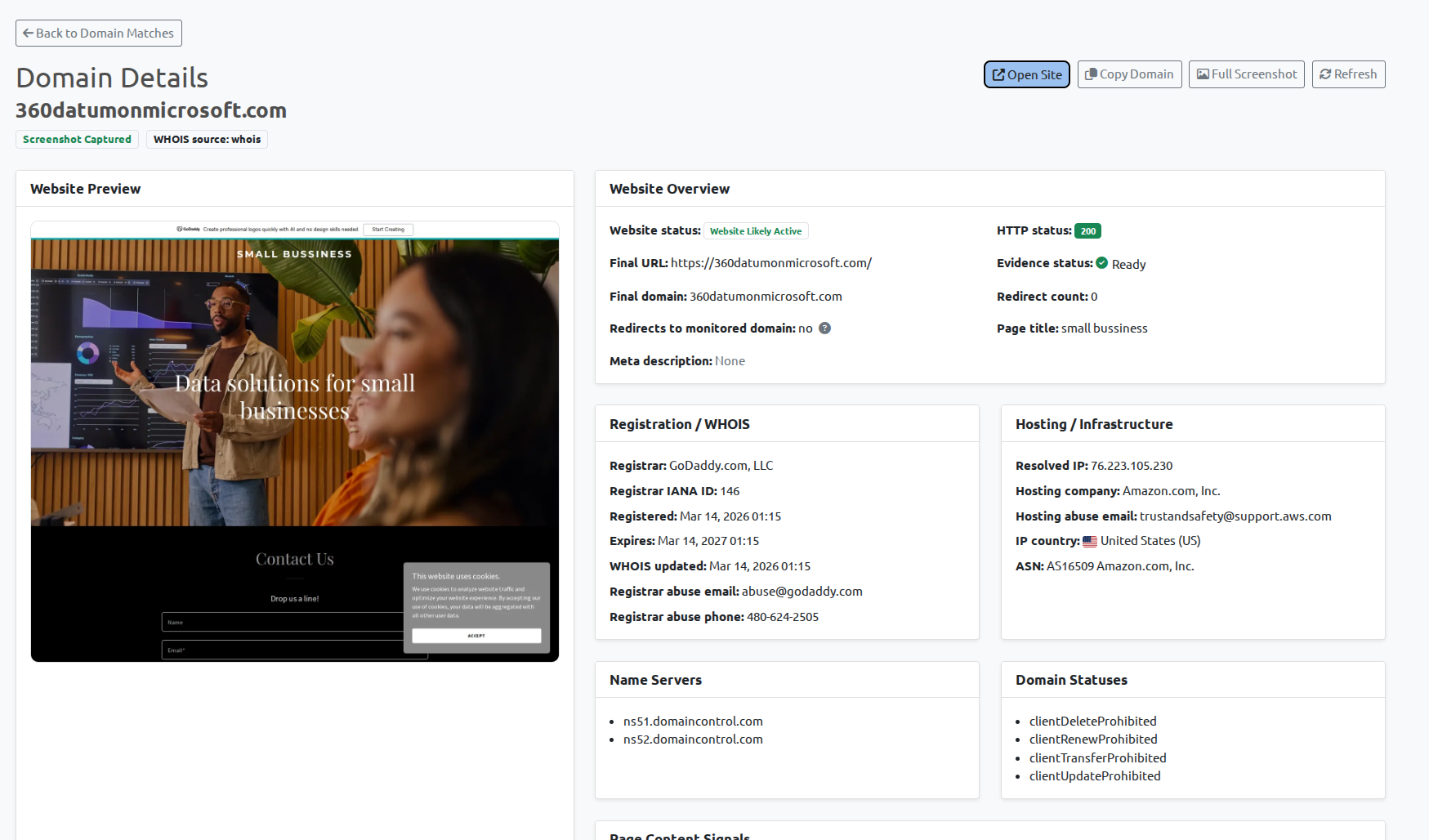
Review each matched domain in one evidence page
A domain match is only the beginning. After a domain appears in your monitoring results, you still need to check what it shows, where it redirects, when it was registered, who the registrar is, and where the website appears to be hosted.
BrandCat now gives each matched domain its own evidence page. The domain link can still open the live website, while the details page stays inside BrandCat as the review record.
- Website screenshot and page overview
- Final URL, final domain and redirect information
- WHOIS / RDAP, registrar and domain status fields
- Resolved IP, hosting, country and ASN information
- Registrar and hosting abuse contacts where available
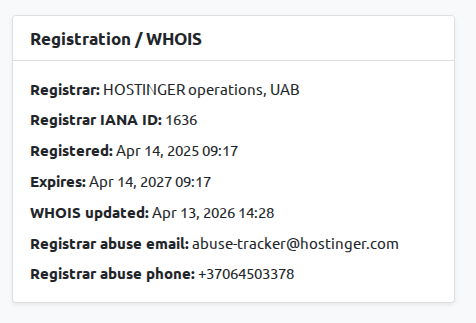
WHOIS, registrar data and abuse contacts
WHOIS and RDAP records can still provide useful review data even when registrant details are private. BrandCat surfaces registrar, registration date, expiration date, updated date, nameservers, domain statuses and registrar abuse contacts where available.
This helps reviewers understand whether a domain is newly registered, which registrar controls it, and which contact may be useful if the domain needs to be reported or escalated.
Registrar, nameserver and registration-date patterns can also help reveal groups of domains that may belong to the same campaign or operator, especially when combined with hosting and redirect evidence.
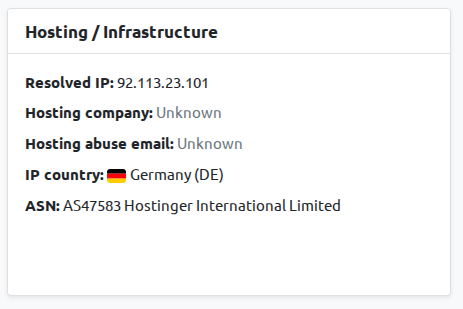
Hosting, IP, ASN and country evidence
Registrar data tells you where the domain is registered. Hosting and IP evidence helps show where the website appears to be served from.
BrandCat can show resolved IP, hosting company, hosting abuse email, IP country and ASN. This makes it easier to group results by shared infrastructure and review related domains together.
A shared IP, ASN, hosting network or abuse contact does not automatically prove anything by itself, but it can be useful when filtering a large result set and looking for domains that may be working together.
Final URLs, redirects and shared patterns
Many matched domains do not stay on the first URL. They may redirect to another domain, a parked page, a marketplace page, a regional landing page or a completely different website.
BrandCat records final URL, final domain, redirect count and redirect chain where available. This helps reviewers understand what the domain actually does after it is opened.
Redirect evidence can also help reveal groups of domains that point to the same final destination or reuse the same redirect pattern.
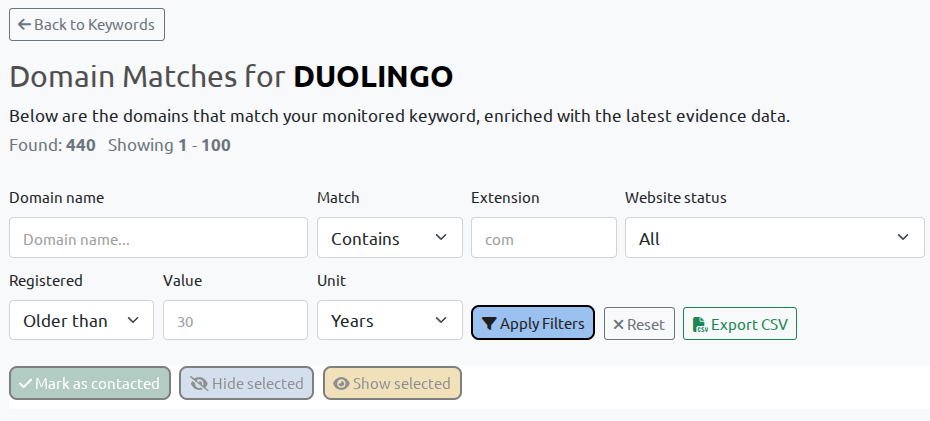
Domain results can be filtered by name, extension, website status, preview status, final URL, registration age, resolved IP and review state.
Actions, exports and reports
Domain monitoring should not end with a long list of names. BrandCat lets users hide reviewed results, mark domains as contacted, copy contacts, open details, and export results to CSV.
Regular email reports can summarize new matches automatically at the frequency you choose, including daily, weekly or monthly reports.
The goal is to keep the review queue useful: collect the match, add the evidence, filter the noise, and keep track of what has already been handled.

Try BrandCat Free
Monitor domains and trademarks across the web, with screenshots, WHOIS, hosting evidence, alerts and reports.
Choose your monitoring plan
Yearly payment plan
Each keyword covers both Domain Lookalike monitoring and Trademark scans across major trademark offices including USPTO, CNIPA, EUIPO, UKIPO, JPO, KIPO and others.
Need Entity Monitoring, higher-volume trademark intelligence, or a custom workflow? Contact us for setup and pricing.
15-day money-back guarantee - No contracts - Cancel anytime
Micro
Small/Micro business, monitoring one critical keyword. Ideal for solo entrepreneurs or small teams.
Keywords limit: 1
Protected domains: 1
15-day money-back guarantee
$7
- per month
$84 per year
Get Started
Scout
For smaller companies needing protection for up to 5 keywords. Perfect for growing teams looking to secure their brand.
Keywords limit: 5
Protected domains: 5
15-day money-back guarantee
$16
- per month
$192 per year
Get Started
Maverick
For medium-sized businesses or trademark protection for multiple products. Supports up to 10 keywords.
Keywords limit: 10
Protected domains: 10
15-day money-back guarantee
$28
- per month
$336 per year
Get Started
BigCat
For large companies or agencies managing many brands and products. Supports 50 keywords with advanced monitoring.
Keywords limit: 50
Protected domains: 50
15-day money-back guarantee
$50
- per month
$600 per year
Get Started
Monthly payment plan
Each keyword covers both Domain Lookalike monitoring and Trademark scans across major trademark offices including USPTO, CNIPA, EUIPO, UKIPO, JPO, KIPO and others.
Need Entity Monitoring, higher-volume trademark intelligence, or a custom workflow? Contact us for setup and pricing.
15-day money-back guarantee - No contracts - Cancel anytime
Micro
Small/Micro business, monitoring one critical keyword. Ideal for solo entrepreneurs or small teams.
Keywords limit: 1
Protected domains: 1
$9
- per month
Get Started
Scout
For smaller companies needing protection for up to 5 keywords. Perfect for growing teams looking to secure their brand.
Keywords limit: 5
Protected domains: 5
$20
- per month
Get Started
Maverick
For medium-sized businesses or trademark protection for multiple products. Supports up to 10 keywords.
Keywords limit: 10
Protected domains: 10
$35
- per month
Get Started
BigCat
For large companies or agencies managing many brands and products. Supports 50 keywords with advanced monitoring.
Keywords limit: 50
Protected domains: 50
$65
- per month
Get Started

2026 BrandCat LLC