Domain Monitoring Guide
How to monitor copycat websites and cloned content
A copycat site may use a completely different domain name while reproducing the wording and structure that customers recognize. BrandCat uses SimHash content matching to surface pages that resemble protected pages so you can investigate the ones that matter.
1. Choose pages customers would recognize
Start with pages that communicate your identity or could be copied for deception: login and account pages, product landing pages, payment flows, customer-support pages, and high-value campaign pages. A generic corporate footer alone is less useful than a page with distinctive content and a clear purpose.
2. Set up content-similarity monitoring
In BrandCat, use the copycat or SimHash monitoring option for the keyword or protected web property you want to follow. This monitoring mode looks beyond domain spelling and evaluates similarity in the public page content associated with discovered domains.
Keep each high-value surface in a separate monitor where possible. It makes alert volume, ownership, and follow-up clearer when different teams own marketing pages, customer support, and authentication flows.
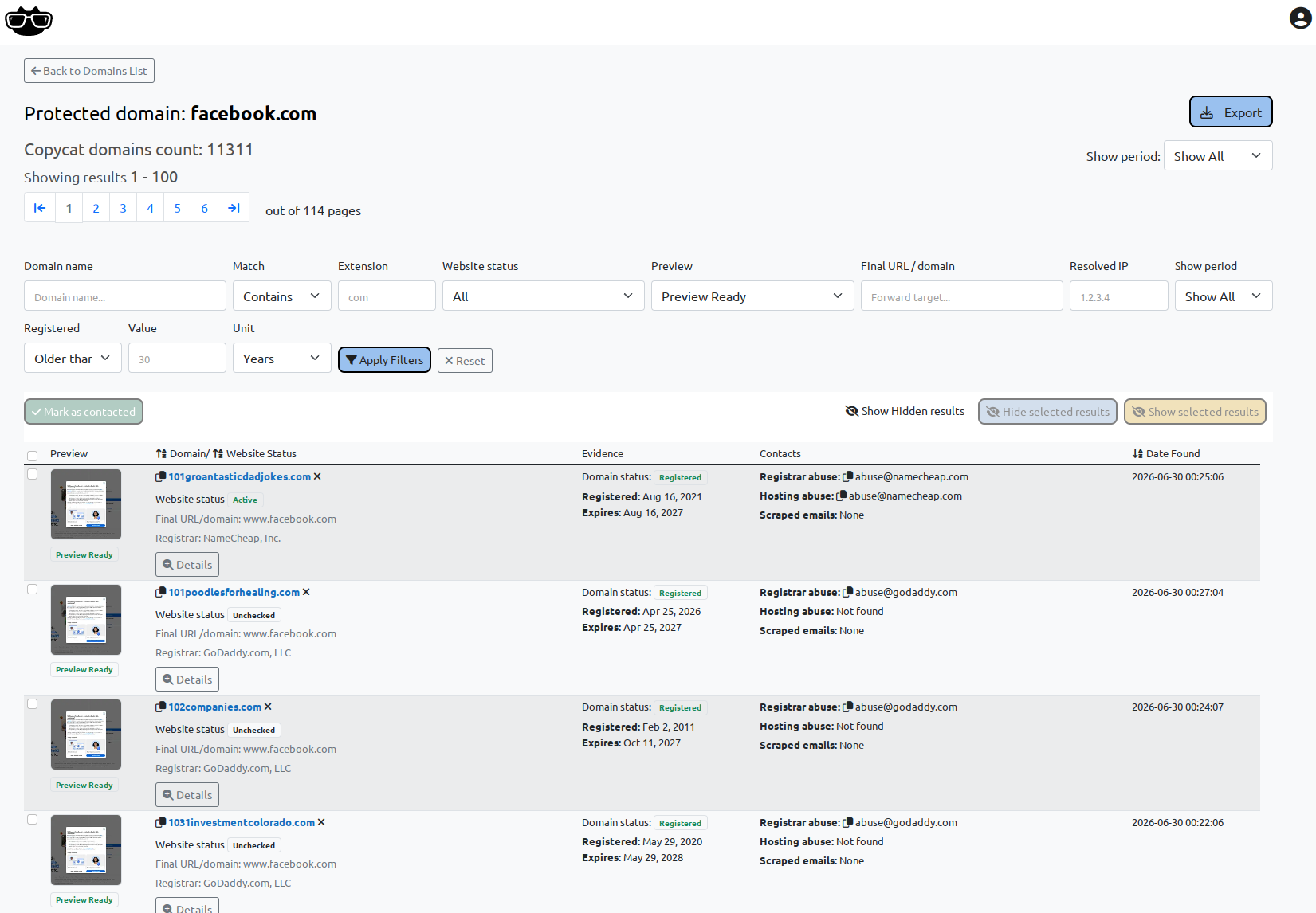
3. Interpret a similarity match in context
High similarity can have harmless explanations, such as a shared template, a reseller, a review site, or a common framework. It becomes more concerning when the page combines similar content with brand-like wording, misleading calls to action, copied imagery, credential collection, or a suspicious domain.
Lower-priority examples
Boilerplate pages, unrelated sites using a common theme, or legitimate partner content.
Higher-priority examples
Brand impersonation, copied customer journeys, deceptive payment or login pages, and phishing indicators.
4. Investigate the page and preserve the useful evidence
Open the result and compare the destination, visible content, screenshot preview, registration details, hosting, and related technical evidence. The final URL is especially useful: a simple redirect to your protected site is usually benign, while a different destination that copies your content deserves closer review. Record why it matters, save a report for the responsible team, and avoid treating a similarity score alone as the final answer.
Ready to look beyond domain names?
Add content similarity monitoring to the brand terms and web properties that are most valuable to your customers and business.
Get started Explore Domain Matching